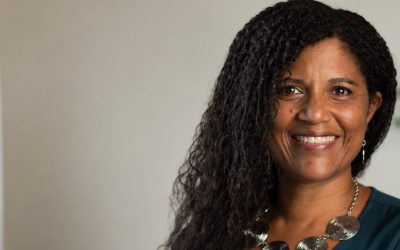
A young mother searching for possibility became a nurse, survivor, educator, advocate, and trusted guide for conversations many people are still afraid to have.
There are moments that change a life quietly.
They do not always arrive as sweeping revelations. Sometimes they begin as a thought spoken aloud. Sometimes they arrive through another person who hears possibility in our words before we are ready to believe in it ourselves.
For Marilyn Pierce, RN, BSN, one of those moments began in a county hospital emergency department.
She was in her early twenties, raising a young son and supporting her family by working at a Jack in the Box and a gas station. Her husband was experiencing recurrent seizures, and their visits to the emergency department were frequent and long.
While they waited, Marilyn watched the nurses.
They were knowledgeable, decisive, and firmly in command. They could enter uncertainty and know what to do. To a young woman carrying the financial and emotional weight of her family, nursing began to represent more than a job. It represented stability, mobility, and the possibility of a different future.
At the time, Marilyn and her husband also had a band—Red, Wife, and Blues. They imagined taking the country by storm. Becoming a nurse, Marilyn thought, might allow her to work anywhere while continuing to support the family and their dream.
The idea had taken root, but she had not yet acted on it.
Then someone listened.
When Someone Else Sees the Possibility
Marilyn eventually mentioned her interest in nursing to a coworker named Craig. He did more than offer encouragement. The next day, he returned with an application to Arizona State University and the paperwork she needed to apply for financial aid.
That simple act moved possibility into motion.
Marilyn completed the forms, entered nursing school, and discovered something she had not yet fully understood about herself: she was capable.
Nursing fit her. As the oldest of nine children, she had spent much of her life caring for others. In school, she found both alignment and evidence of her own ability. She earned strong grades and completed her final semester with all A’s.
The achievement gave her something tangible to hold onto.
“Look what I did. Look what I accomplished. Oh my gosh, there’s something here.”
That growing self-recognition would become essential.
For fourteen years, Marilyn lived within an abusive marriage. She describes the experience as one that steadily diminished her sense of worth and left her believing she was not enough. When she eventually left, she took her three children to a domestic violence shelter and later to transitional housing.
The experience was frightening and disorienting. Marilyn compared arriving at the shelter to landing on Mars: everything familiar was gone, everyone around her was under stress, and she was trying to create safety for her children while finding her own way forward.
But she was no longer alone—and she was a nurse.
When Nursing Becomes a Pathway Out
Marilyn’s nursing degree gave her the financial means to leave, but the profession gave her something equally important: people who believed her, encouraged her, and protected her.
As she wrestled with whether she could follow through, nurses at the clinic where she worked reminded her that she could. After she left, her former husband appeared at her workplace looking for her. Marilyn was trembling in a back room while colleagues stayed beside her. Her nurse manager stood between Marilyn and the threat and said simply, “Nope. You may not see her.”
In that moment, nursing was not an abstract professional identity. It was economic agency, community, and protection.
“Nursing gave me an opportunity to leave because I was a nurse, and I had a job, and I had support.”
Over time, Marilyn began learning to see herself differently. At first, she relied on trusted people to reflect the qualities she could not yet recognize.
“I trusted others that I knew to know me better than I knew myself because I was not able to see me.”
Gradually, that changed. Through self-development, reflection, physical transformation, and years of lived experience, Marilyn began reclaiming the person beneath the beliefs that had once confined her.
She also began asking what she could do with everything she had survived.
Rather than allowing hardship to become the final definition of her life, Marilyn chose to transform it into empathy and service. Her experiences deepened her understanding of people living with abuse, fear, diminished self-worth, and uncertainty. The circumstances that once made her feel powerless became part of her capacity to recognize possibility in others.
Craig had once become a bridge to Marilyn’s future. The nurses around her became a bridge to safety.
Years later, Marilyn would recognize that she was becoming a bridge herself.
The Story That Disrupted What She Believed
Marilyn’s journey into cannabis nursing began with another story powerful enough to change the direction of her life.
In 2018, she was cohosting and producing an online radio program when a physician joined the show to discuss medical cannabis advocacy. Before the interview, Marilyn was skeptical. She had spent decades in nursing and worked within a university-based healthcare system. If cannabis were truly relevant to health and medicine, she reasoned, surely someone would have taught her.
Then the physician shared his experience.
After fracturing his cervical spine, he had moved from clinician to patient. Pain, depression, professional losses, and suicidal thoughts altered his life. His experience with cannabis eventually led him toward advocacy.
As Marilyn listened, something shifted.
“It became like an epiphany. Oh my gosh, I have been lied to. I have been coddled. I have not seen the truth.”
The realization did not immediately make her fearless. It made her curious.
Marilyn began interviewing people, studying cannabis, and examining the gap between what she had been taught and what patients were experiencing. She also became acutely aware of the professional risks nurses perceived around the subject. She feared what an open association with cannabis might mean for her employment, reputation, and security.
Her curiosity continued anyway.
When Marilyn later stepped away from institutional nursing to care for her aging parents, she continued learning. Her path eventually connected her with board-certified OB-GYN and integrative medicine physician Felecia Dawson, MD, and Jamaican herbalist Oskii Chevanier. Together, they wrote Why We DIE, How To LIVE: Beyond Pills and Procedures—Cannabis and Holistic Healing, an evidence-informed exploration of holistic health, chronic disease, botanicals, and lifestyle.
Yet knowledge alone did not erase stigma.
The Stigma We Carry Within
While caring for her mother, who was living with Parkinson’s disease, Marilyn was asked whether she had considered cannabis to help manage some of her mother’s symptoms.
Despite everything she had learned, she hesitated.
Her friend Oskii asked why she would keep potentially helpful information from someone she loved. The question brought Marilyn to tears because it required her to confront the distance between what she intellectually believed and what she was emotionally prepared to do.
Her fear was no longer theoretical. It was living inside the choices she was making for her own mother.
That realization became a source of humility and empathy.
Marilyn understood that people do not release decades of stigma simply because they receive new information. Facts arrive inside personal histories. Every conversation about cannabis may carry memories of family conflict, arrest, substance use, professional risk, fear, shame, or loss.
Education matters, but information cannot reach someone who does not yet feel safe enough to receive it.
“Create the space first. And space creates the opportunity for connection.”
This understanding became central to Marilyn’s work. She learned not to overwhelm people with everything she knew or attempt to defeat their beliefs through confrontation. She began with relationship, dignity, and listening.
Connection first. Then trust. Then the possibility of learning.
Becoming the Cannabis Nurse Connector
Today, Marilyn describes herself as the Cannabis Nurse Connector—the person willing to help answer questions someone may not feel comfortable asking a physician, family member, friend, or faith leader.
Her role is not simply to provide information. It is to make honest inquiry safer.
That work takes Marilyn into nursing organizations, cannabis reform meetings, community education, legislative advocacy, and conversations with people who may know very little about cannabis. She understands that meaningful change rarely occurs by speaking only with people who already agree.
In one political meeting, Marilyn listened as a highly accomplished candidate repeated common cannabis talking points that Marilyn knew were incomplete or inaccurate. Rather than embarrassing or attacking her, Marilyn began by recognizing her intelligence, service, and integrity. She then invited the candidate into a more honest conversation.
The approach changed the atmosphere. Defensiveness softened. Learning became possible.
“You have to come at it in a way that is with grace and with love and with caring, and find that connection first.”
For Marilyn, bridge-building does not mean abandoning truth or avoiding difficult realities. It means creating a passage through which truth can travel.
From Stepping Stones to Bridges of Steel
Marilyn once described herself as a small set of stepping stones across a stream. With time and experience, those stones became a wooden bridge. Now, she says, she is crossing bridges made of steel.
The image captures the evolution of her life.
She crossed from financial uncertainty into a profession. From abuse into safety. From diminished self-worth into self-recognition. From inherited stigma into curiosity. From private learning into public advocacy.
Now she helps others make crossings of their own.
Her understanding of nursing has also expanded. Through Margaret Newman’s nursing theory, Health as Expanding Consciousness, Marilyn came to articulate something nurses have long experienced but healthcare systems often fail to measure: healing emerges through relationship and presence.
“We cannot heal others, but they can heal themselves, and we can support that by connecting to them.”
Nursing cannot be reduced to procedures, policies, or tasks. It lives in the moment a patient feels heard, the instant a frightened person realizes they are not alone, and the relationship that helps someone recognize a choice they could not see before.
Marilyn’s life reflects that truth.
Craig did not complete nursing school for her. He placed the application in her hands.
Her nurse manager could not undo years of abuse. She stood at the door and made that moment safer.
Oskii could not erase Marilyn’s stigma. He asked the question that helped her see it.
Again and again, someone created a passage—and Marilyn chose to cross.
What Becomes Possible on the Other Side
Marilyn does not romanticize hardship. She knows that growth can be painful, frightening, and profoundly uncomfortable. But she has developed a way of understanding adversity that allows her to keep moving.
“Everything is for me, not against me.”
She looks for what an uncomfortable experience may be preparing her to understand, become, or offer. And when the discomfort becomes too much, she returns to something that restores her: water, the beach, and space to breathe.
Her story asks something of every nurse.
Who recognized possibility in us before we could see it?
Where has nursing given us access, agency, protection, or purpose?
What difficult experience has deepened our ability to serve?
And what bridge are we now uniquely positioned to build for someone else?
A bridge does not force anyone across. It does not decide the destination or make the journey on another person’s behalf.
It creates safe passage.
Sometimes, simply knowing that passage exists is enough to help someone begin moving forward.
Marilyn Pierce once needed others to help her recognize the way.
Today, she has become the bridge.
Explore Marilyn Pierce’s Work
- Why We DIE, How To LIVE: Beyond Pills and Procedures—Cannabis and Holistic Healing
- Ground Work Before Pound Work: Creating Life Changes from the Inside Out
- “Medical Cannabis Stigma: The Hidden Barrier in Healthcare”
- “Bridging Barriers to Change: The Stigma of Medical Cannabis from the Clinician’s Perspective”
- Marilyn Pierce: Your Voice Dismantles Stigma—Healthcare Advocacy & Leadership
Watch the full Conversations That Connect interview, Becoming the Bridge with Marilyn Pierce, through Cannabis Nurses Network.
Invite Marilyn Pierce to bring her wisdom, lived experience, and message of courageous connection to your next event. Request Marilyn as a Speaker
Content note: This article and the accompanying interview include discussion of domestic violence, threats, homelessness, and suicidal thoughts. Confidential domestic violence support is available in the United States through the National Domestic Violence Hotline at 800-799-SAFE (7233) or TheHotline.org.